
2025 International Conference on Embodied Intelligence and Large Models (EILM 2025)
December 19-21, Chengdu, China
On December 19, 2025, the 2025 International Conference on Embodied Intelligence and Large Models (EILM 2025), hosted by Southwest Jiaotong University, organized by the School of Computing and Artificial Intelligence, Southwest Jiaotong University, and co-organized by KDD China, was grandly held at the Double First-Class Conference Center Hall of Xipu Campus, Southwest Jiaotong University.

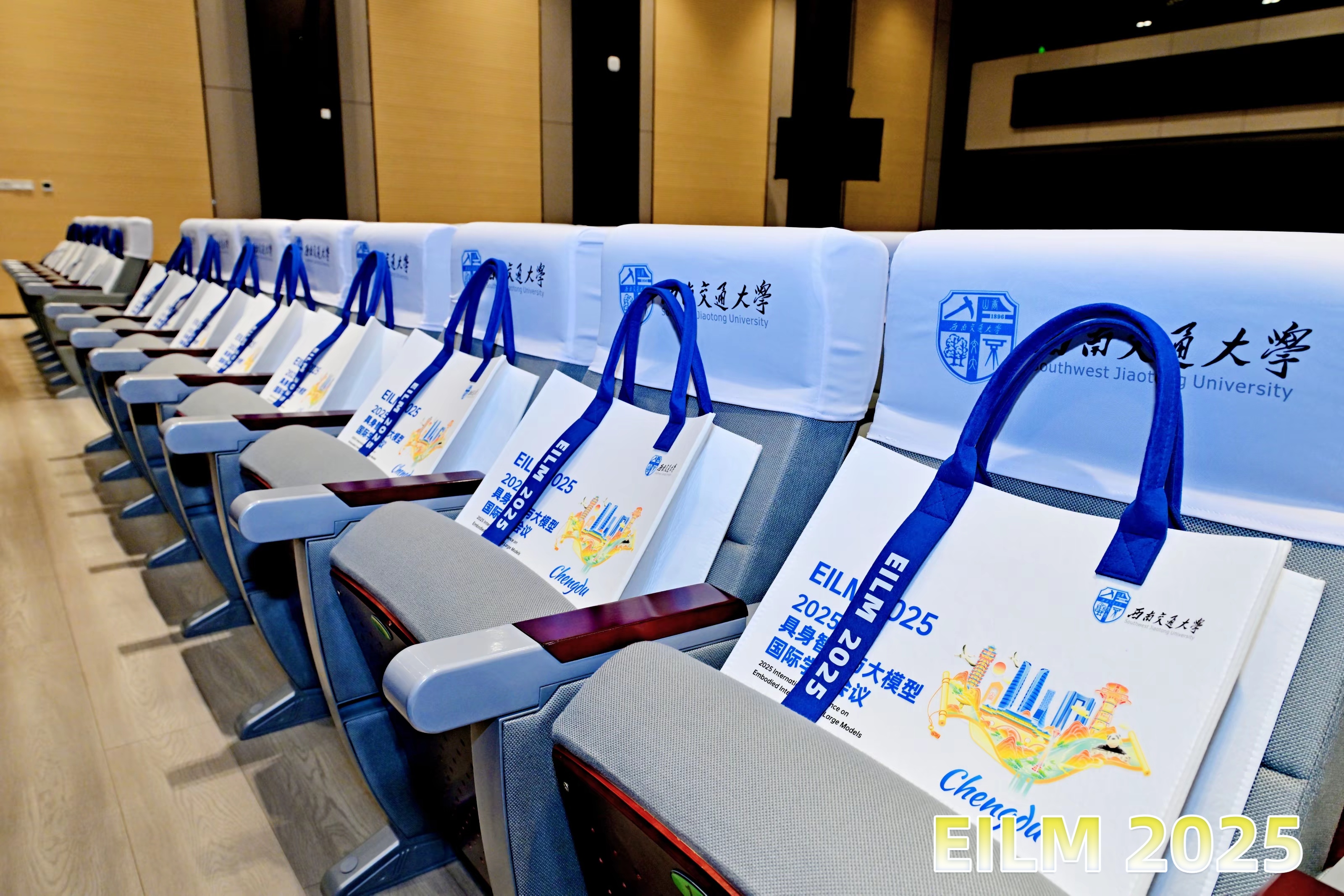
Sign in for EILM 2025


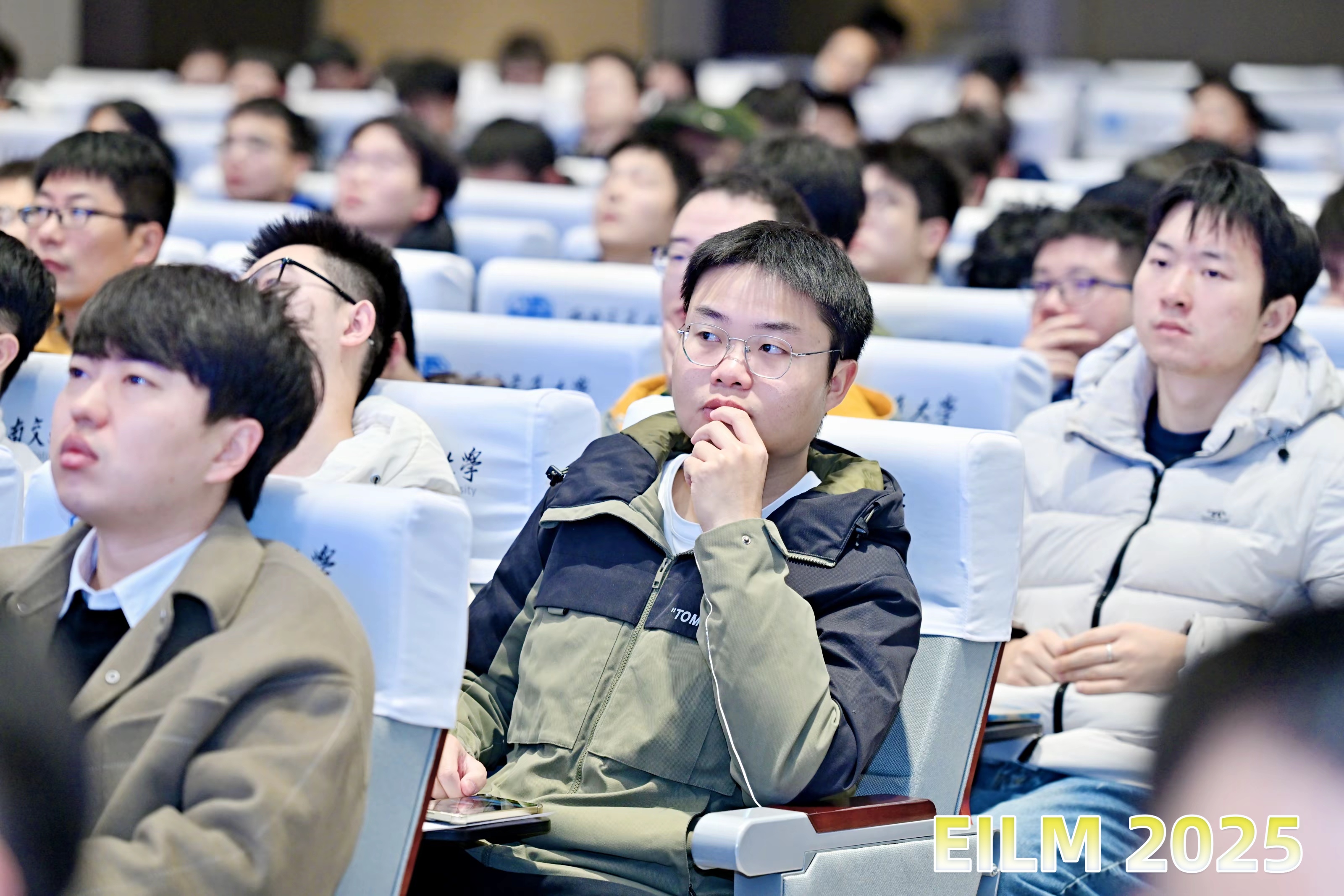
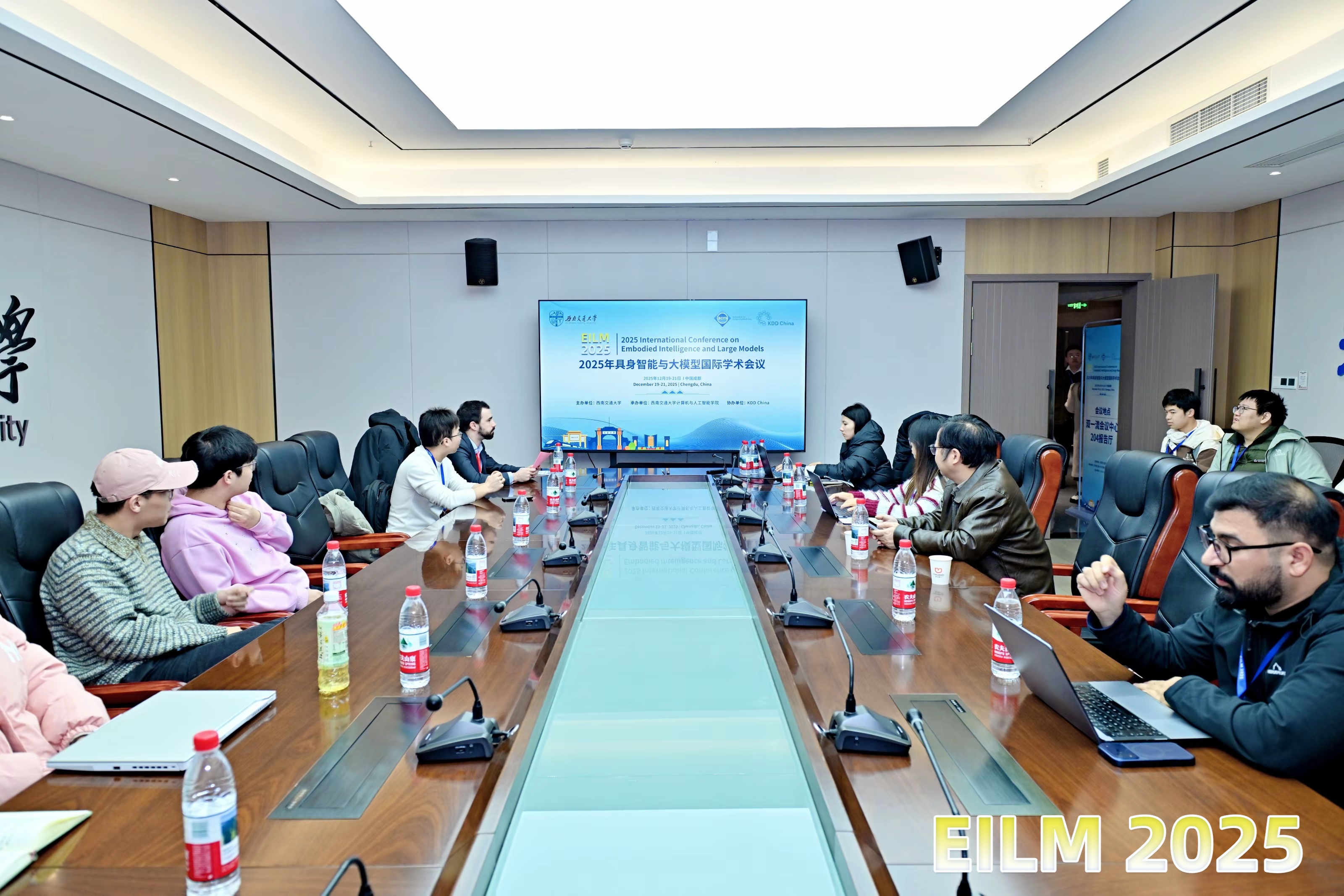
Pingping Gao, Deputy Secretary of the Party Committee of Southwest Jiaotong University, Professor Anthony (Tony) Cohn and Professor Jie Xu from the University of Leeds (UK), Professor Yu Zheng, Vice President of JD. com and Chairman of KDD China, Professor Min Liu from Hunan University, Professor Tianrui Li, Professor Andrew Lim, Professor Donghai Zhai, and Professor Xun Gong from Southwest Jiaotong University, as well as nearly 300 experts and scholars from universities and research institutions at home and abroad such as Shanghai Jiao Tong University, Southwest Jiaotong University, Macau University of Science and Technology, Tibet University, Chongqing Normal University, Jimei University, and State Grid Gansu Electric Power Company Information and Communication Company, gathered in Chengdu. They focused on key topics including embodied intelligence foundation models, learning and generalization in embodied systems, multimodal perception and interaction, and real-world application implementation, jointly exploring new paths for the development of intelligent technologies. The conference included several important sessions such as opening remarks, keynote reports, oral presentations, and the award ceremony for the Best Paper Awards.
Opening Remarks
On behalf of the university, Pingping Gao, Deputy Secretary of the Party Committee of Southwest Jiaotong University, delivered a speech. He reviewed the important contributions of Southwest Jiaotong University to serving the national rail transit cause over the past 129 years, introduced the university's scientific research layout and interdisciplinary integration progress in the fields of artificial intelligence and embodied intelligence, extended a warm welcome to the conference being held at Southwest Jiaotong University, and hoped that participating experts and scholars would focus on the theme of the in-depth integration of embodied intelligence and large models, deepen academic exchanges, inspire innovative ideas, strengthen scientific research cooperation, tackle key problems collaboratively in real complex scenarios and engineering applications, and continuously promote breakthroughs in key technologies of embodied intelligence and their industrialization development.


Keynote Speeches
The keynote Speech session was co-hosted by Professor Tianrui Li, Dean of the School of Computing and Artificial Intelligence of Southwest Jiaotong University, and Professor Xun Gong, Vice Dean. Many top experts and scholars at home and abroad took the stage to share cutting-edge achievements around their respective report themes, bringing an academic feast focusing on specialized fields:
Professor Anthony (Tony) Cohn, Fellow of the Royal Academy of Engineering (UK) and from the University of Leeds, delivered a report themed "Can Large Language Models Reason about Spatial Information?". Focusing on the intersection of large language models and spatial information reasoning, he deeply analyzed the current technical bottlenecks of large language models in spatial information understanding and logical reasoning, proposed targeted optimization paths, and provided new theoretical references for improving the spatial perception and decision-making capabilities of embodied intelligent systems.

Professor Yu Zheng, Chairman of KDD China and Vice President of JD. com, delivered a report titled "Urban Computing: Enabling Spatio-temporal Intelligences in Cities". Centering on the field of urban computing, he shared the practical achievements of urban computing technology in empowering urban spatio-temporal intelligence, constructed a technical implementation link of "spatio-temporal data - computing models - intelligent applications" for urban scenarios, and demonstrated the core value of this technology in the urban embodied intelligence system.

Professor Min Liu, Secretary of the Party Committee of the School of Artificial Intelligence and Robotics of Hunan University, delivered a report titled "Preliminary Studies on Embodied Surgery Robots". Focusing on the cutting-edge application scenario of embodied surgical robots, she introduced the preliminary research progress of the team in this field, including the exploration of key technologies such as multimodal perception adaptation of robots and optimization of intraoperative interaction accuracy, providing preliminary practical support for the implementation of embodied intelligence in medical surgical scenarios.

Professor Andrew Lim from Southwest Jiaotong University delivered a report themed "From Theory to Transformation: AI, Optimization & Simulation in Modern Supply Chains". Centering on the core logic of "from theory to industrial transformation", he shared the integrated application achievements of AI, optimization algorithms, and simulation technology in the field of modern supply chains, proposed an intelligent technology implementation framework adapted to supply chain scenarios, and provided an innovative path for the transformation and upgrading of embodied intelligence towards the industrial field.

Oral Presentations
In the oral presentation session, experts and scholars focused on showcasing cutting-edge research achievements in embodied intelligence and large models. The presentation content covered multiple directions such as intelligent algorithm optimization, multimodal perception technology, and industrial application implementation. Participating scholars conducted in-depth discussions around the presentation content, providing valuable ideas for the further advancement of related research and laying a solid foundation for industry-university-research collaborative innovation.

Best Paper Award Ceremony
To encourage academic innovation and commend outstanding achievements, the conference specially set up a Best Paper selection session. The review team strictly followed the three core principles of "academic innovation, research value, and on-site expression", conducted multiple rounds of rigorous reviews on the submitted papers, and finally selected 2 Best Papers. Professor Tianrui Li presented the certificate to the winning authors.

2025 International Conference on Embodied Intelligence and Large Models (EILM 2025) successfully completed all agendas. This conference not only built an efficient academic exchange platform for scholars at home and abroad, deepened the academic consensus in the fields of embodied intelligence and large models but also promoted the accurate connection between cutting-edge technologies and industrial needs, injecting strong momentum into technological innovation and achievement transformation.


The success of the conference is inseparable from the profound insights of experts and scholars at home and abroad and the enthusiastic participation of all participants. In the future, EILM will continue to uphold the concept of "academic leadership, technological empowerment, and win-win cooperation", build a higher-level international exchange platform, work with global colleagues to deepen the fields of embodied intelligence and large models, promote academic progress and technological development, and contribute wisdom and strength to the high-quality development of the economy and society. May the friendship between colleagues at home and abroad last forever, and may we work together to stand at the forefront of the wave of the digital intelligence era and compose a new chapter in the development of intelligent technology!
